Architecture proven in the lab and shaped by operations

Amit Singh

Network, Security, and AI Infrastructure Architect

I design and validate multi-domain infrastructure, then turn field experience into practical guidance for engineers, product teams, and technology leaders.

Two decadesAcross enterprise, service-provider, data-center, security, and cloud infrastructure
Triple CCIERouting and Switching, Data Center, and Security
3 booksPublished technical books, with a fourth forthcoming from Apress
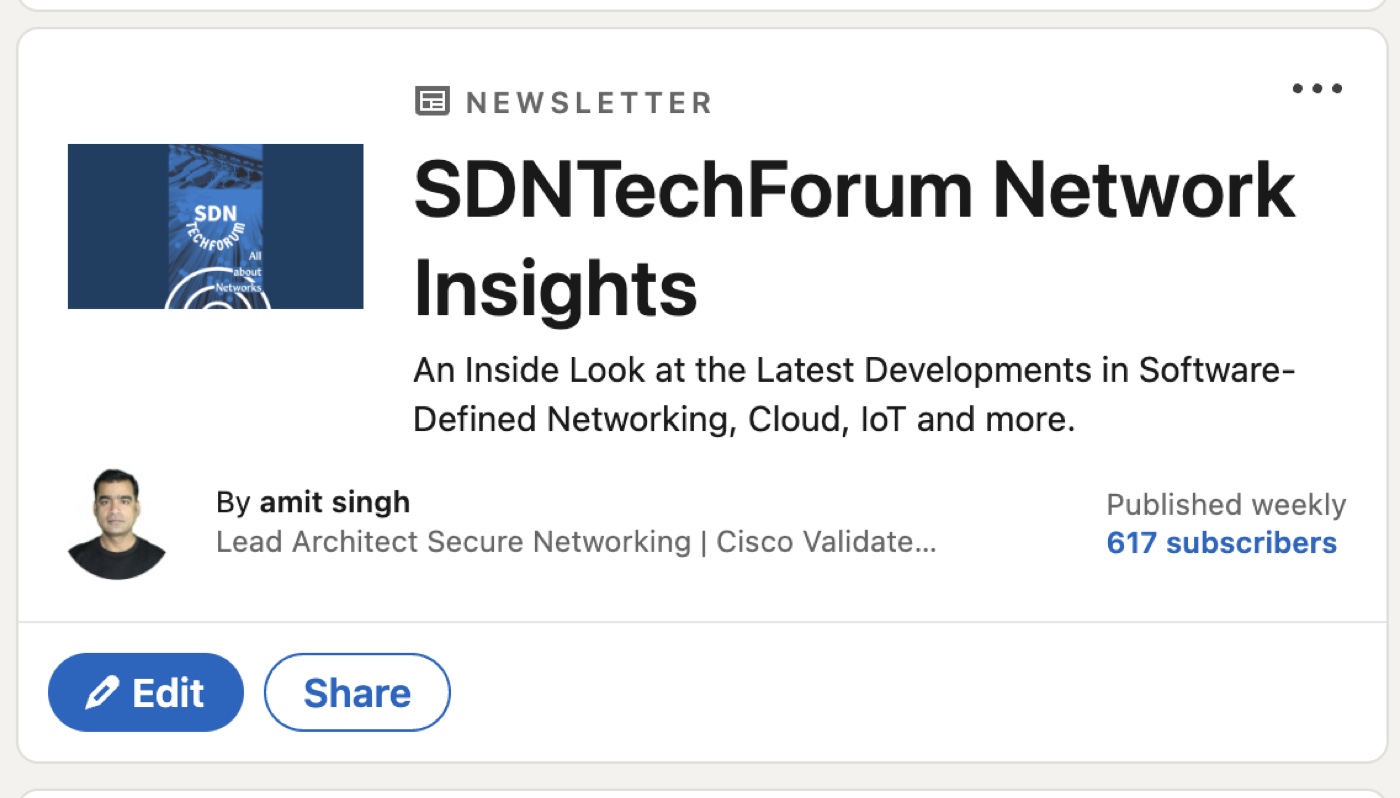
SDN TechForum5,000+ subscribers and 400+ technical videos
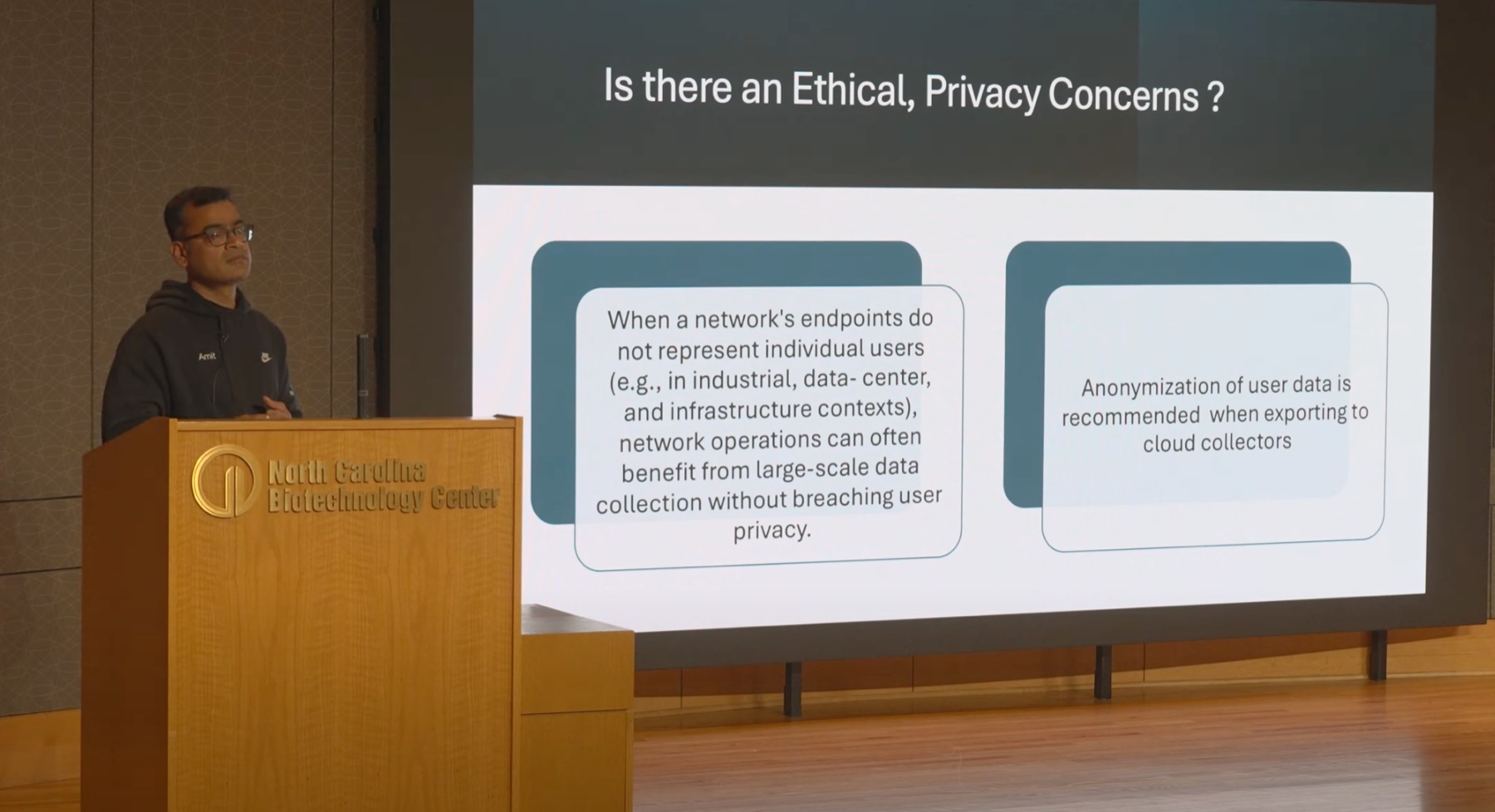
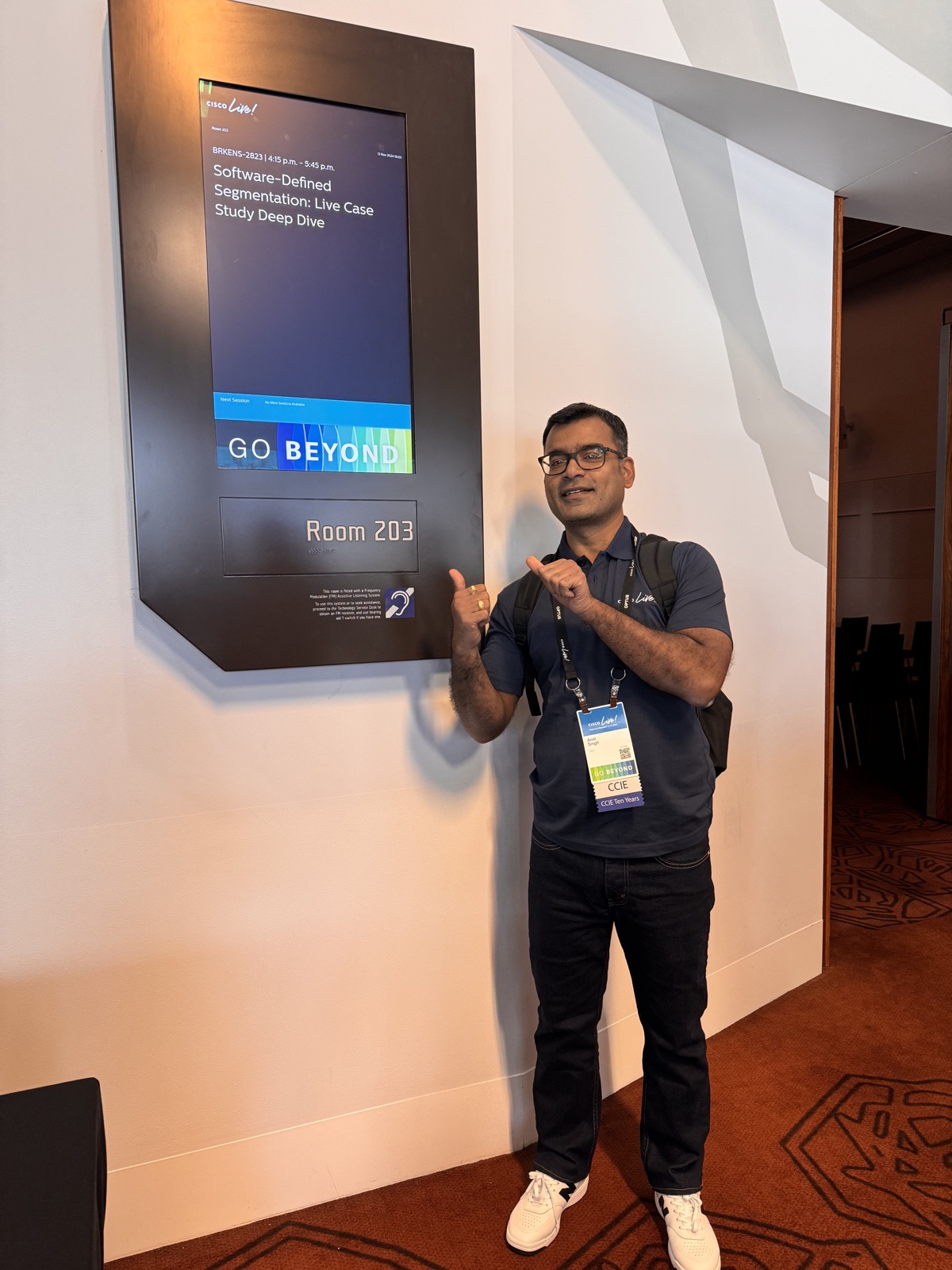
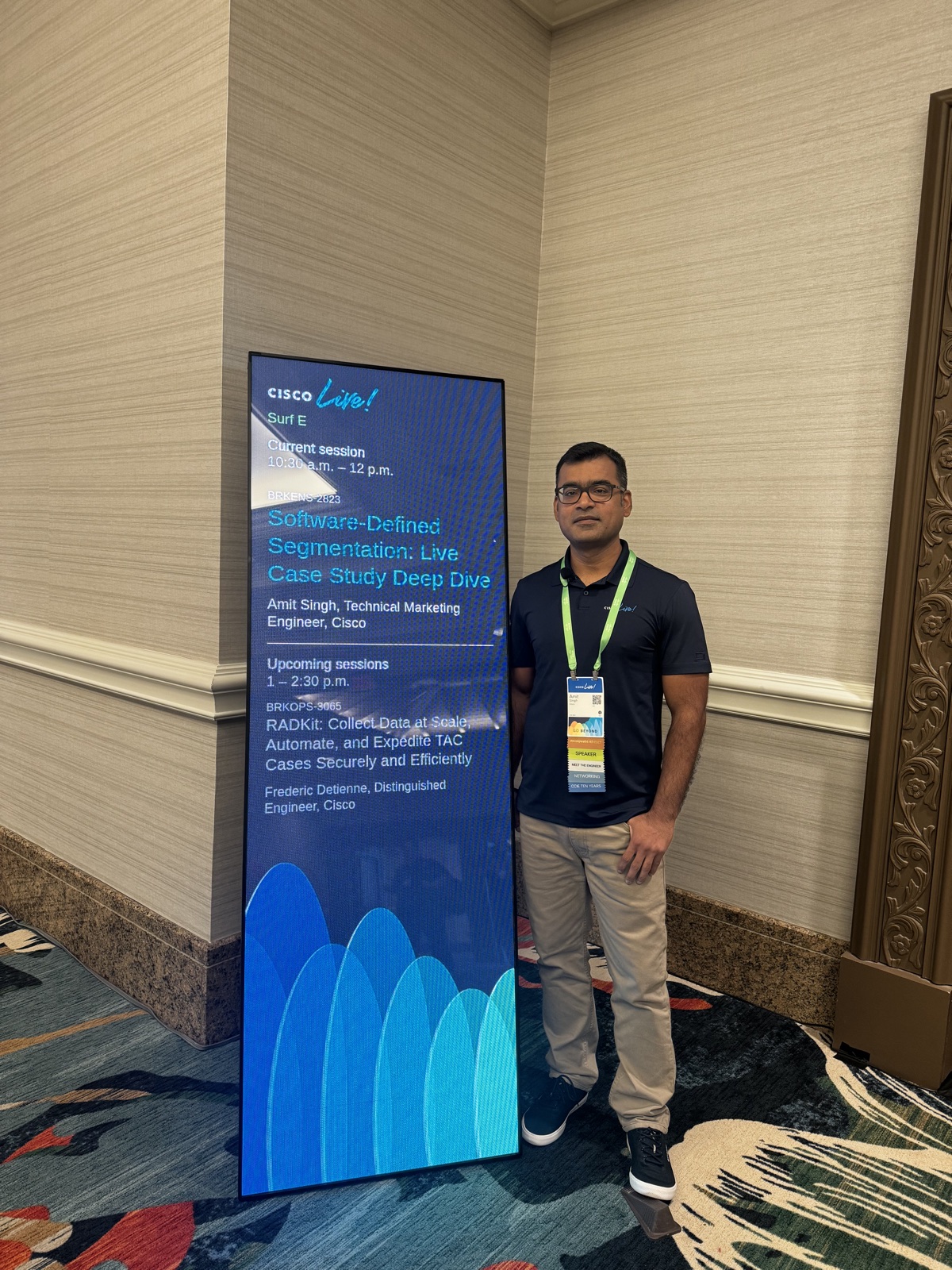
Cisco LiveSpeaker, instructor, and technical educator across global events
01 / Selected work

Systems that survive contact with reality

These projects show the architecture, validation discipline, and operating judgment required to move from a promising design to a trusted capability.

Traditional campus
SD-Access
EVPN / VXLAN
SD-WAN
Meraki
Cloud
Common identity and policy intent

Identity and policy / Multi-domain architecture

One policy across many fabrics

A common identity and policy model designed, demonstrated, and taught across traditional campus networks, SD-Access, BGP EVPN/VXLAN, SD-WAN, Meraki, and cloud-connected environments.

Read the case study
Constrain authorityManifest-controlled, read-only tools outside the model
Preserve evidenceSource, time, scope, and gaps remain visible
Verify assumptionsAction-critical facts checked against authoritative sources
Stop safelyIncomplete evidence blocks high-impact action

Agentic operations / Network safety

Giving infrastructure agents evidence, boundaries, and a way to stop

Two complementary safety mechanisms frame trustworthy automation as a systems problem: constrain authority at the tool boundary, preserve evidence, and verify the assumptions behind consequential actions.

Read the case study
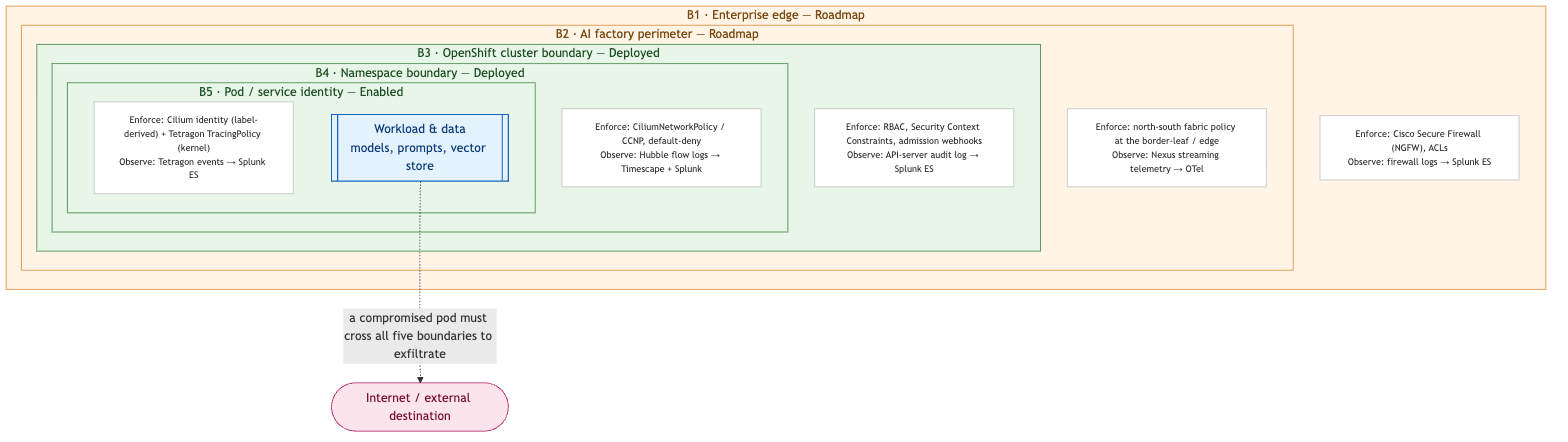
Layered Secure AI Factory trust boundaries from workload identity to enterprise edge

AI infrastructure / GPU platforms / Security

Designing a secure foundation for enterprise AI

A public, lab-validated Cisco architecture connecting GPU compute, OpenShift, NVIDIA AI Enterprise, VXLAN-EVPN networking, identity-based workload controls, model protection, and security analytics.

Read the case study
Independent technical education
SDN
TechForum
Networking and automation
Security and zero trust
Cloud and data center
IoT and emerging technology
02 / Watch, read, and listen

A public lab notebook for infrastructure practitioners

I founded SDN TechForum to make complex infrastructure understandable through demonstrations, written guides, how-to sessions, product explorations, and architecture discussions. Across YouTube, Medium, and the companion podcast, the library follows the same pattern as my professional work: start with how the system behaves, show the implementation path, and explain what to verify when it does not.

2018Channel founded
5K+Subscribers on the public channel
400+Published technical videos
Selected from the platform

Six pieces selected to balance current technical direction, hands-on proof, presenter-led depth, audience value, and communication across video, audio, and writing.

03 / Active inquiry

Questions I am working on

Architecture advances when the unresolved operating questions are made explicit, tested, and shared.

01

How can one policy intent survive across campus, WAN, data center, cloud, and security boundaries?

02

What evidence should an infrastructure agent require before it recommends or executes an action?

03

How should AI-ready data centers integrate network resilience, workload identity, assurance, and threat inspection?

04

What must a validated architecture prove about failure, recovery, and ownership before adoption?

04 / Books

Long-form technical education

Each book begins with a practitioner question and develops the architecture, implementation choices, and operating consequences around it.

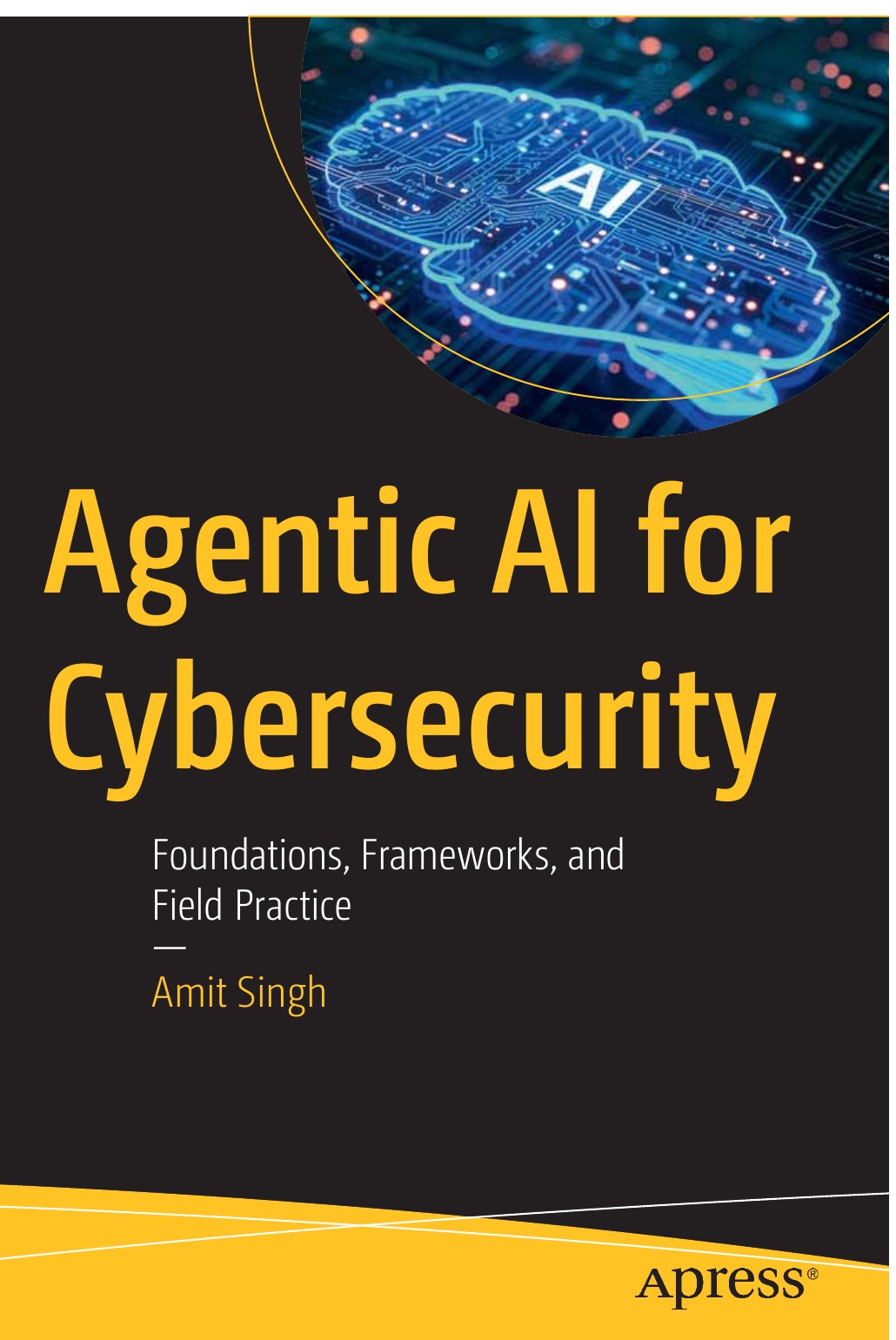
Front cover of Agentic AI for Cybersecurity by Amit Singh

Scheduled October 20, 2026 / ISBN 979-8-8688-3236-9

Where agent design meets operational safety

This forthcoming book connects agent architecture, evidence, bounded authority, and cybersecurity practice. It focuses on the controls needed when AI systems move from advising operators to participating in real workflows.

View catalog record
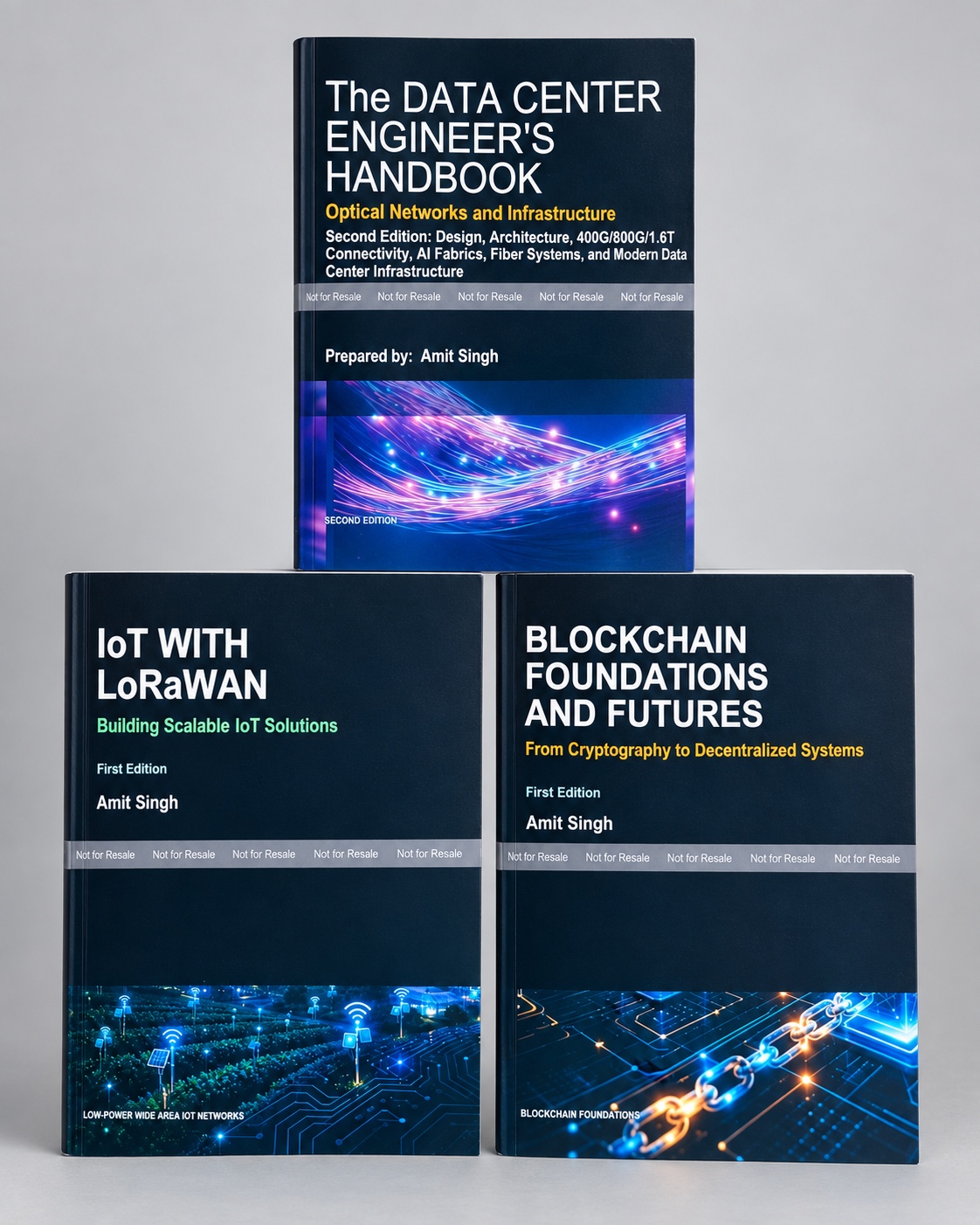
Professional studio presentation of three published books by Amit Singh: The Data Center Engineer's Handbook, IoT with LoRaWAN, and Blockchain Foundations and Futures
Three practitioner books spanning data-center infrastructure, IoT, and blockchain systems.
Data center / Second edition

The Data Center Engineer's Handbook

Optical networks, AI fabrics, and infrastructure decisions for the 400G, 800G, and 1.6T era.

View book
Internet of Things

IoT with LoRaWAN

An engineering guide to LoRaWAN foundations, deployment, security, and scalable IoT systems.

View book
Distributed systems

Blockchain Foundations and Futures

A systems-oriented path from cryptographic foundations to decentralized and enterprise architectures.

View book
05 / Independent build

SafeFleet connects vehicle telemetry to useful action.

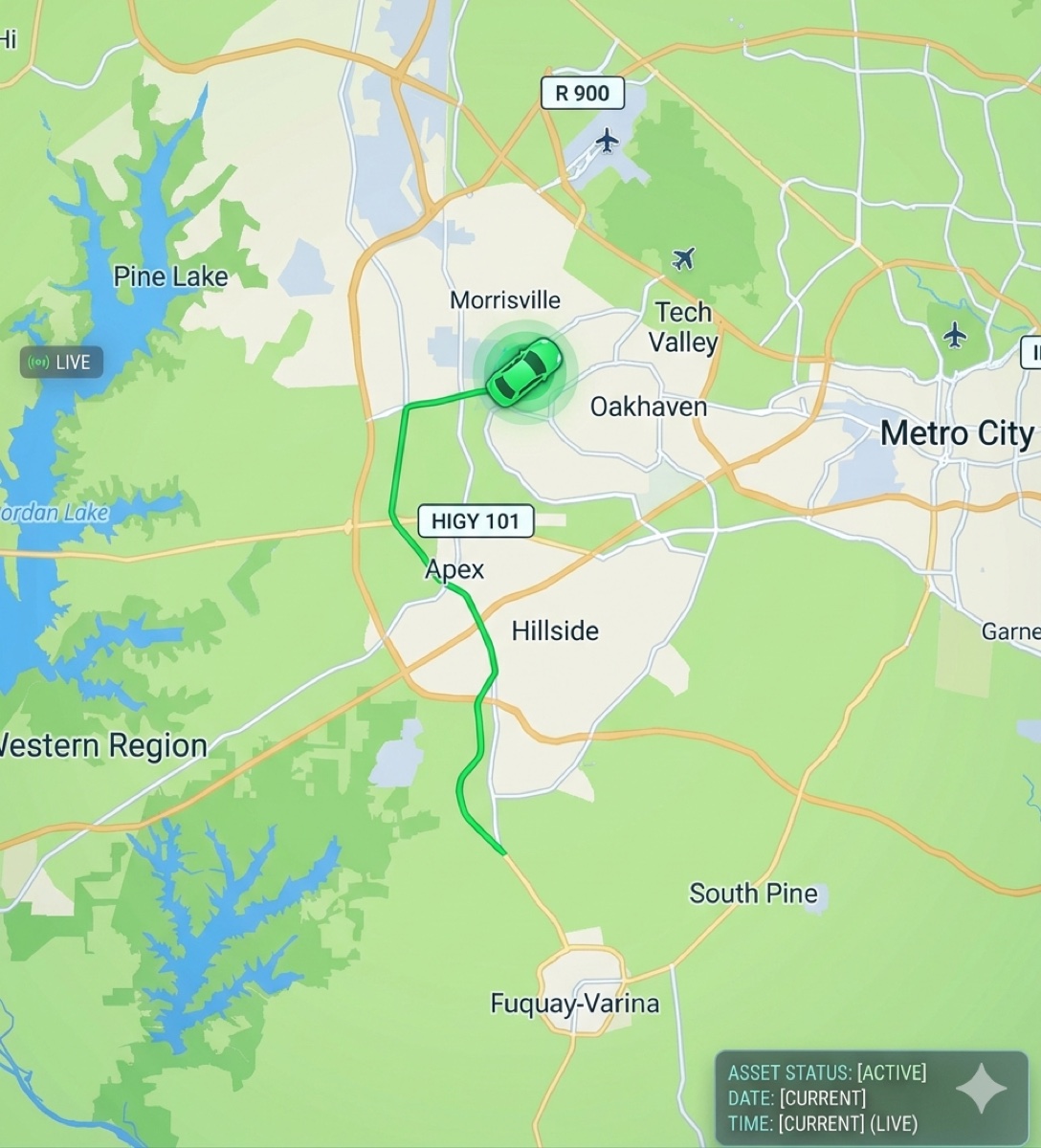
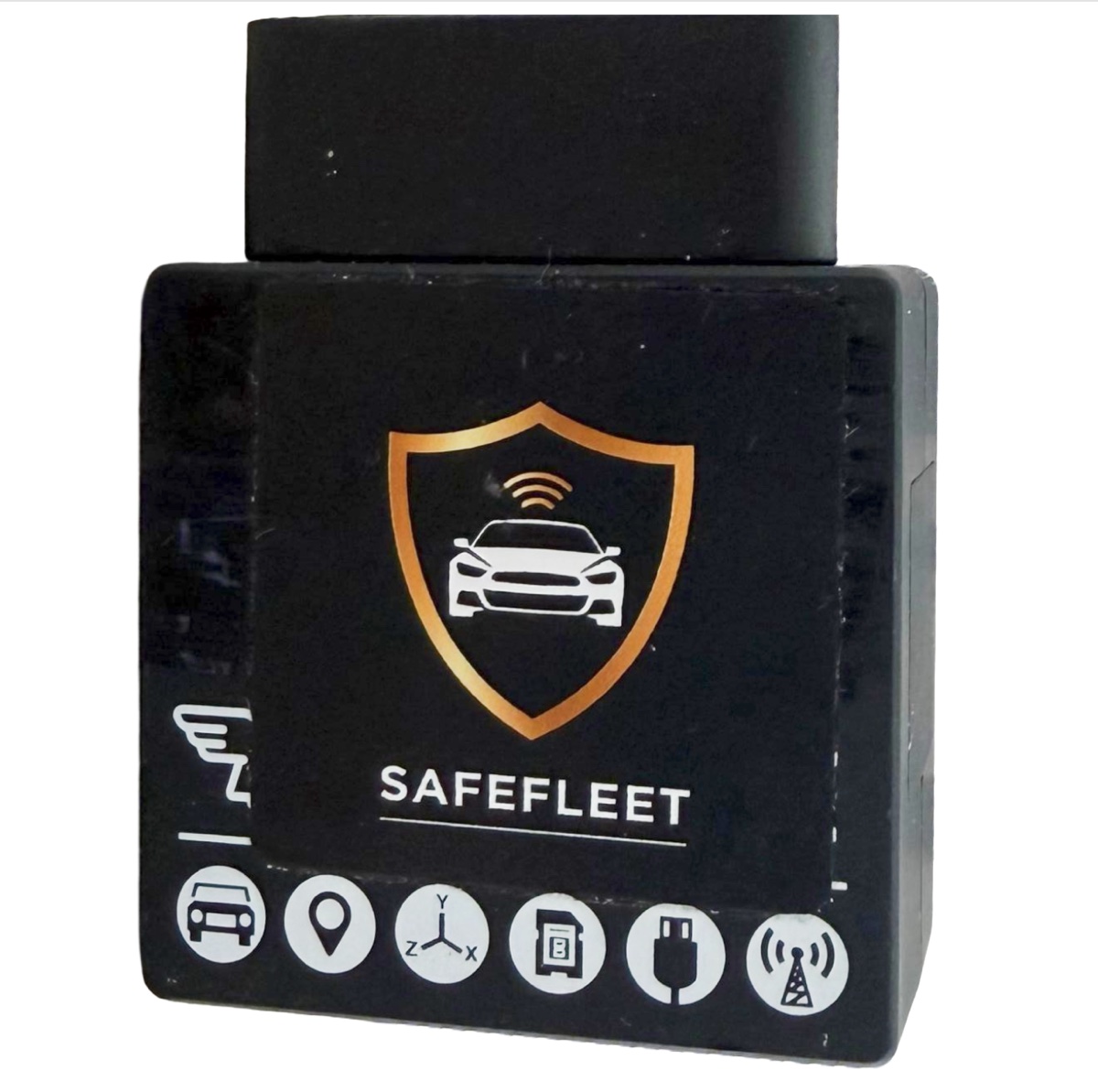
I built SafeFleet as a hands-on connected-mobility project that pairs an OBD device with a real-time tracking experience. The prototype brings together physical telemetry, location visibility, daily activity reporting, and alerts for overspeed or unexpected locations.

Hardware + softwarePlug-in OBD device and user-facing experience
Telemetry to contextLocation and vehicle activity made operationally useful
Product workflowTracking, reporting, and alerts in one demonstrable concept
SafeFleet real-time vehicle tracking interface showing a live route
Live location and route visibility
SafeFleet plug-in OBD vehicle telemetry device
Plug-in OBD hardware prototype
06 / Research

From emerging technology to operating judgment

Research spanning trustworthy agents, cybersecurity, post-quantum transition, applied AI, and resilient infrastructure.

Journal paper

The PQC Transition: Challenges and Strategic Implementation

A strategic treatment of cryptographic migration, standards, and implementation risk.

Read paper
Journal paper

Contextual Threat Intelligence and Alert Prioritization

A framework for adding operational context to security-alert prioritization with Foundation-Sec-8B.

Read paper
IEEE conference paper

Detection of Advance Malware Threats

An evaluation of hybrid deep learning and image analysis for advanced malware detection.

Read paper
Defensive publication

Detection-Conditional Multi-Agent Adversary Emulation

An adaptive agent design that changes emulation techniques in response to detection signals.

Read disclosure
07 / Speaking and teaching

Making complex systems useful to others

Cisco Live sessions and hands-on labs, Cisco Learning Network articles, SDN TechForum demonstrations, engineering workshops, and long-form technical education.

Cisco Live / 2024BRKENS-2823: Multi-domain segmentation, presented in Las Vegas and Melbourne
Cisco Live / 2025Unleash the Power of Campus Networking: Build Your Network, Your Way
Cisco Learning NetworkSix-part secure multi-domain networking series with embedded technical demonstrations
SDN TechForum / Since 2018More than 300 technical videos for networking, security, cloud, data-center, and IoT practitioners
08 / About

Engineer.
Author.
Educator.

I have spent my career where architecture meets operational consequence.

From enterprise and service-provider engineering to Cisco IT Customer Zero and Cisco Validated, the work has followed one pattern: understand the system deeply, test assumptions against reality, and make the resulting knowledge useful to others.

Read the full story

Let us compare notes on multi-domain architecture, trustworthy agents, and AI-ready infrastructure.